01
Structured submissions
Separate export and import reporting, with fields and item details aligned with the established reporting standard.
Case Study
We transformed a detailed reporting process into a structured digital workflow for the United Nations Register of Conventional Arms, connecting multilingual submissions, administrative tools, and document generation.

01 — Challenge
Organizations often rely on established forms, documents, and procedures to collect and manage information. Turning these processes into usable software requires preserving the underlying requirements while making the workflow practical for users and administrators.
For the United Nations Register of Conventional Arms, Member States submit annual reports on international transfers of conventional arms. The system needed to accommodate detailed reporting requirements, historical submissions, administrative oversight, and users working across multiple languages.
02 — The Approach
The reporting standard provided the foundation for the digital process. We structured the workflow around the information required, the different types of submissions, and the administrative tasks supporting them.
Separate export and import reporting, with fields and item details aligned with the established reporting standard.
A separate interface for managing country information and UN Member State settings.
Migrate existing reports to maintain access to previous submissions.
DOCX and PDF downloads to support established reporting and review processes.
03 — Implementation
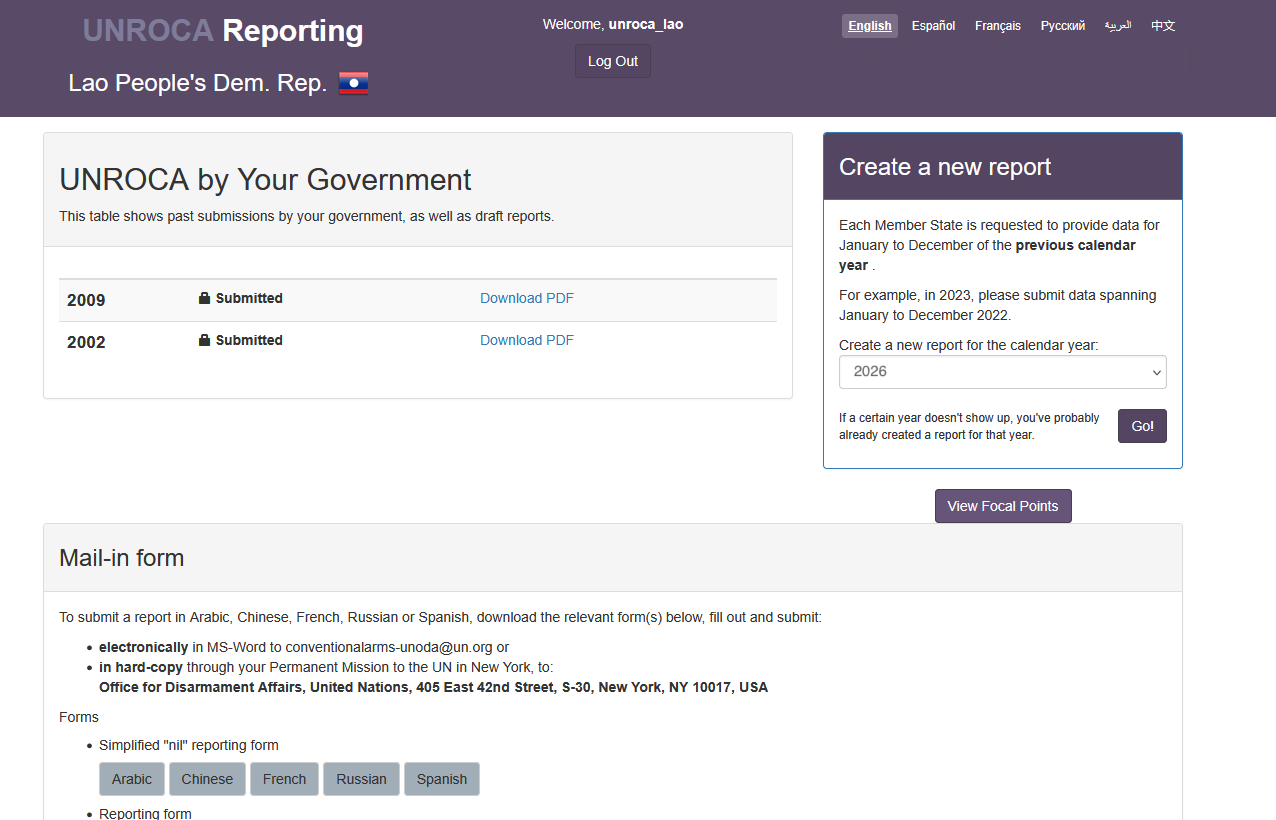
The application brings together a reporting interface for participating countries and administrative tools for managing their information. Existing reports were migrated to preserve access to previous submissions, and users can download reports in DOCX or PDF format.
.png)
Application technologies: Angular for the reporting interface and Django for the application and administration.
Multilingual reporting
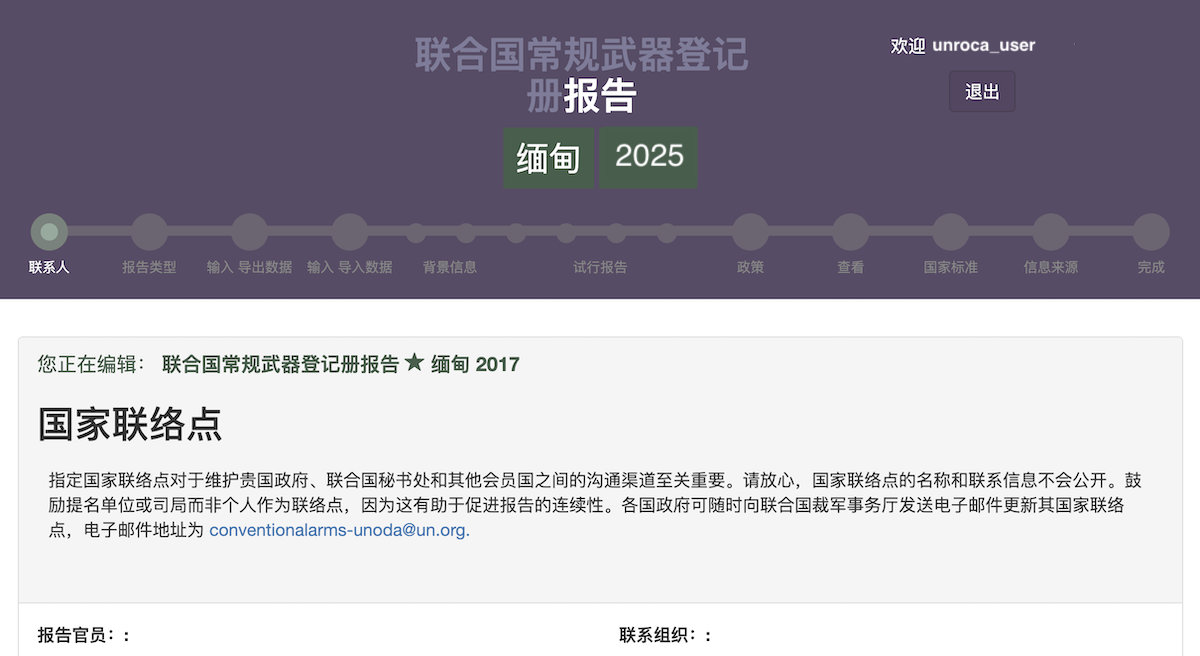
The reporting interface supports all six official UN languages: English, Arabic, Chinese, French, Russian, and Spanish. The separate administrative interface is English-only.
04 — Result
The updated platform brings the formal reporting structure into a Member State reporting workflow, with separate reporting entry points and supporting administration. It connects structured submissions, administrative tools, and a real operational workflow.
This project demonstrates our ability to turn formal reporting requirements into usable reporting software by connecting structured submissions, administrative tools, and a real operational workflow.