Treaty relationships
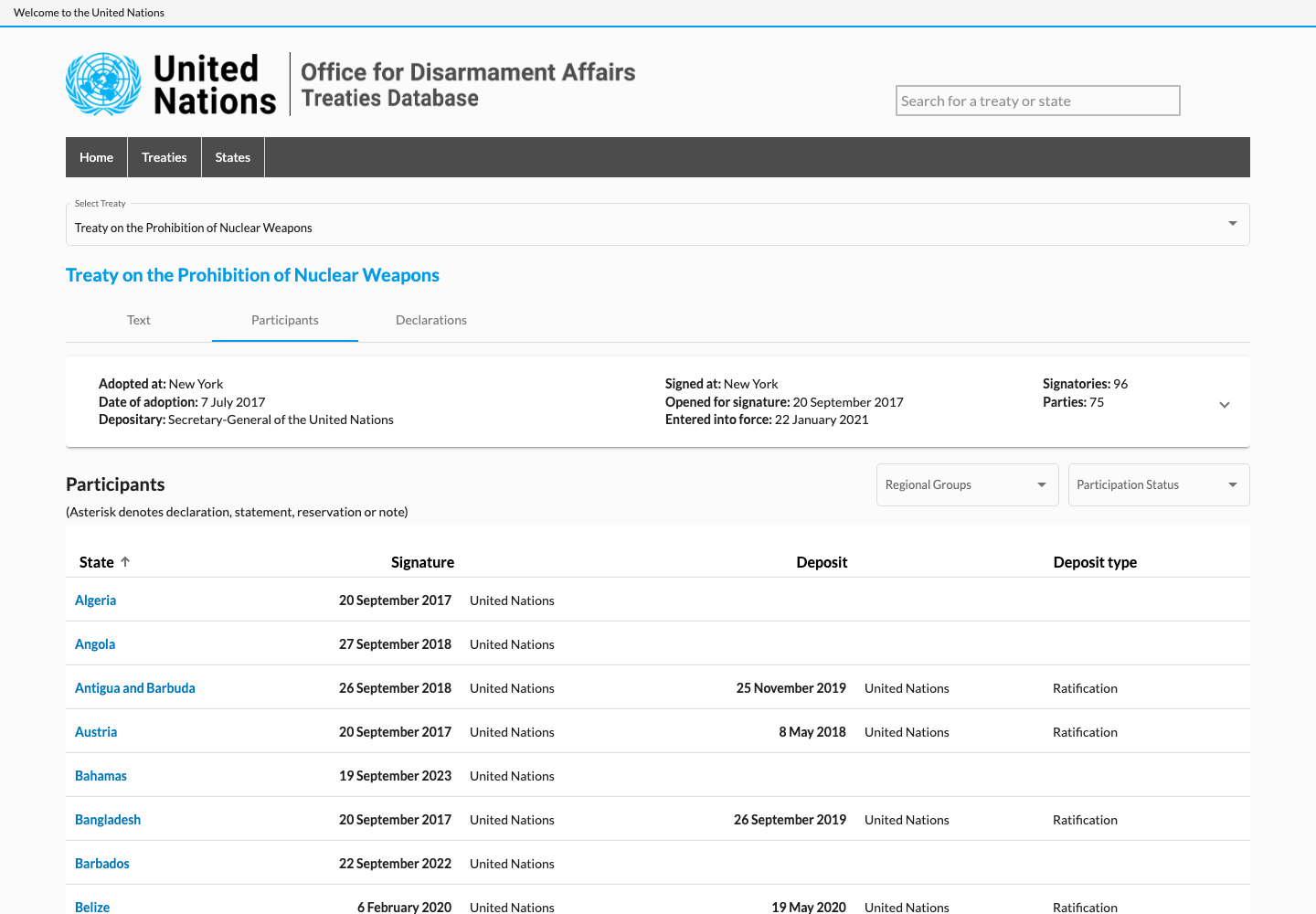
Treaties, protocols, and amendments are represented as related records. Signatures, ratifications, declarations, and objections remain associated with the relevant treaty and participating State.
Case Study
We helped modernize the UN Treaties Database by connecting treaty records, State participation, and historical information in a system designed for reliable administration and public access.
01 — The challenge
Treaty records include more than the original agreement. They may also involve protocols, amendments, participating States, signatures, ratifications, declarations, and objections. These connections become harder to manage when records span decades and historical country names or information change.
The goal was to organize this information so administrators could maintain it consistently and the public could explore treaties and related records without losing important historical context.
02 — The approach
The system needed to represent how treaties, related instruments, and State actions connect, while accounting for historical exceptions and inconsistent legacy records.
We also aligned treaty information with a shared Countries database, helping maintain consistency across systems when country names or identities changed over time.
03 — Implementation
The system connects treaty relationships, State actions, historical data, and administrative tools.
Treaties, protocols, and amendments are represented as related records. Signatures, ratifications, declarations, and objections remain associated with the relevant treaty and participating State.
We reviewed legacy records, addressed inconsistent formatting and incomplete information, and accounted for historical exceptions that required more than simple name matching.
Administrative tools support maintenance of treaty details, dates, actions, and country relationships. Shared country data helps reduce inconsistencies across related records.
04 — Outcome
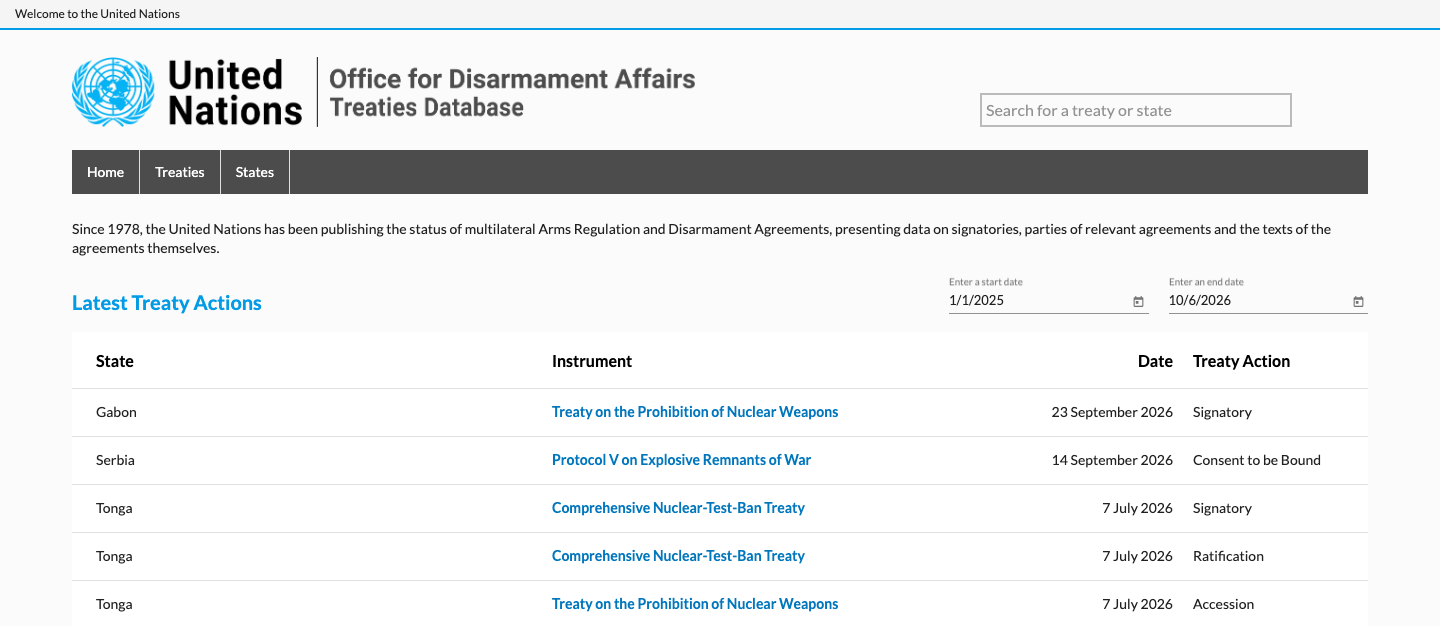
The database brings treaty records, State participation, and related actions together in a structured system that supports public exploration and ongoing administration.
Capabilities
What this project demonstrates
This project demonstrates our ability to connect complex treaty records, State participation, and historical information in a system that supports reliable administration and public access.